Solar Energy on the Gold Coast: How Solar PV and Batteries Work (and How to Get It Right)
Many Gold Coast property owners ask the same question: will solar actually lower bills, or just add another expensive system to manage? For households and businesses evaluating Solar Energy, the answer depends less on headline panel size and more on climate, usage timing, roof design, and tariff structure.
This guide explains how solar PV systems work, how to size them for Gold Coast conditions, what affects payback, and which design mistakes most often reduce performance.
Why Solar Energy Makes Sense on the Gold Coast
The Gold Coast has strong solar exposure, long cooling seasons, and electricity use that often peaks during sunny hours, which makes grid-connected solar especially practical for local homes and businesses. LUX GRID delivers this by designing tailored solar and battery solutions for both residential and commercial properties on the Gold Coast. Their systems are built to maximise self-consumption by aligning solar generation with your actual energy usage, which is where the real financial value of solar lies
Rising retail tariffs have changed the economics of residential solar and commercial solar more than feed-in tariffs have. Each kilowatt-hour used on site avoids a retail purchase, so shifting pool pumps, air conditioning, and hot water into daylight hours usually matters more than chasing export income.
Peak demand refers to the periods when electricity usage across the grid is at its highest, often during hot afternoons when air conditioners and appliances are running simultaneously. On the Gold Coast, these peak demand times often align with sunny hours, and solar PV can be especially valuable on time-of-use or demand-based tariffs where daytime usage is priced higher. By generating and using solar power during peak demand, households and businesses can avoid higher tariff rates and reduce strain on the grid, further improving the financial and environmental value of their systems.
Gold Coast housing stock also helps. Single-storey homes, newer estates, and broad roof planes often allow cleaner PV layouts with fewer obstructions, which improves usable output and lowers design complexity.
Gold Coast Conditions That Affect Solar Output
Coastal weather creates variable production patterns, with humidity, passing cloud bands, and storm activity changing daily yield even in a high-sun region. Solargain and other national installers often highlight annual generation estimates, but on the Gold Coast, daily variability matters because self-consumption decisions are made hour by hour, not year by year.
Salt air and seasonal storms raise the importance of corrosion resistance, mounting quality, and waterproofing. Hardware that looks similar on a quote can perform very differently over time in a coastal environment, which is why material selection affects lifecycle value as much as nameplate wattage.
What “Savings” Really Means
Most solar savings come from avoided grid imports first and exports second. That is why a premium inverter brand such as Sungrow can only deliver strong financial results when the system is matched to the property’s actual load profile, not just installed at the largest size the roof can hold.
A well-designed system reduces expensive daytime purchases and uses feed-in tariffs as a secondary benefit. Real savings are therefore operational, not theoretical, and they improve when occupants understand when power is being used.
Solar Energy Basics: How a Home Solar PV System Works
A home PV system turns sunlight into usable electricity through a simple chain: panels generate DC power, and a solar inverter converts it into AC power for appliances and circuits. In practical terms, solar power only becomes financially useful when the inverter, switchboard, and metering are configured to direct energy first to household loads, then to battery charging or export.
The switchboard acts as the traffic controller between solar generation, grid supply, and any solar battery installed later. This interaction matters because poor integration can limit usable output, create nuisance tripping, or complicate future upgrades.
Performance depends on orientation, tilt, shading, and component quality more than brochure efficiency alone. A CEC Approved Solar Retailer may present compliant options, but system value still depends on whether the design reflects the site rather than a standard template.
Key Components You’ll Hear About
PV modules: Panels that generate DC electricity from sunlight.
Solar inverter: The unit that converts DC to AC and manages system output.
Mounting system: Rails, clamps, and roof attachments that secure the array and protect structural integrity.
Cabling, isolators, and monitoring: Electrical connections, safety devices, and software that track performance.
Optional additions include battery storage, a consumption meter, an EV charger, and a power optimiser for modules affected by partial shade. These extras matter when the goal is not just generation, but control over when and how energy is used.
Consumption monitoring is a recommended feature for any modern solar installation. By tracking real-time household energy use alongside solar production, consumption monitoring helps owners understand exactly when and how electricity is being consumed. This data makes it easier to adjust usage patterns, identify unexpected loads, and optimise self-consumption, which directly improves the financial return from solar.
Grid-Connected vs Battery-Ready vs Hybrid
Grid-connected systems are usually the simplest option and often deliver the shortest payback period because they avoid the cost of storage. Battery-ready and hybrid inverter setups cost more upfront, but they can reduce future retrofit complexity if evening demand is likely to rise.
Step-by-Step: How to Size Solar Energy for Your Gold Coast Property
Good sizing starts with data, not panel count: your tariff type, any export limit, and (ideally) interval data showing when you use power matter as much as total kWh. Twelve months of bills help estimate average daily kWh and seasonal changes, but usage timing usually requires interval (smart meter) data or a consumption monitor, which matters because export limits and roof space can make an oversized system less valuable than a smaller, better-matched one.
Future loads also matter. An EV, ducted air conditioning, electric hot water, or pool heating can change the economics of today’s design, so sizing should reflect where demand is going, not only where it has been.
Step 1: Read Your Usage Profile (Not Just Your Total Bill)
Look for daytime versus evening consumption, because that split determines self-consumption potential. A household that uses most of its electricity after sunset may still benefit from PV, but the design logic changes and may point toward storage.
Also identify demand spikes from air conditioners, hot water systems, and pool equipment. These loads often create the best opportunities for daytime scheduling.
Step 2: Map Roof Constraints
Count usable roof faces, shading sources, vents, and setbacks before choosing panel quantity. Trees, neighbouring buildings, and roof structures can reduce output unevenly, so a layout that appears large on paper may perform poorly in practice.
East-west splits can broaden production across the day. On the Gold Coast, that often improves real self-consumption more than concentrating all panels on one idealized face.
Step 3: Decide Whether a Battery Helps
Batteries help most when evening usage is high, feed-in tariffs are low, or your tariff structure makes evening imports expensive—and when your goal is either higher self-consumption or defined backup coverage. Battery sizing should follow measured night-time demand rather than marketing claims about energy independence, because storage that sits half-used rarely justifies its cost.
Costs, Rebates, and Payback: What to Expect on the Gold Coast
System pricing varies with array size, inverter type, roof complexity, and electrical work such as metering or switchboard changes. The biggest pricing mistake is comparing totals without comparing scope, because two quotes can differ materially in compliance work, monitoring, and product tier.
Requesting multiple solar quotes from reputable installers is a critical step in the decision process. Comparing solar quotes helps you identify differences in system design, equipment quality, warranty terms, and the scope of installation work. A detailed solar quote should clearly outline all components and services, making it easier to assess value and avoid hidden costs.
Small-scale Technology Certificates (STCs) usually reduce the upfront cost of eligible PV systems through a point-of-sale discount when approved equipment is installed by an accredited provider under program rules. For many owner-occupied properties, STCs can materially improve upfront economics, alongside factors like self-consumption and retail tariff rates.
Battery rebates and finance schemes can change, so current eligibility should always be checked before making assumptions about payback. A realistic payback estimate depends on self-consumption, tariff structure, and actual production, not on a single annual savings figure.
What Drives Solar PV Pricing Up or Down
Premium panels, stronger warranties, advanced solar monitoring, and better inverters generally cost more because they reduce operational uncertainty over time. LUX GRID frames this correctly through its commitment to quality workmanship using premium materials and expert techniques, backed by clear upfront pricing and no hidden surprises, because installation quality affects long-term cost as much as hardware.
Complex roofs, multiple arrays, difficult access, and compliance upgrades also increase labour and materials. Lower quotes can exclude important items, which shifts risk to the owner after installation.
Understanding STCs and Eligibility (In Plain English)
STCs are a federal incentive applied by the installer or retailer as an upfront discount. Eligibility depends on compliant installation, approved equipment, and system size within program rules.
Design Choices That Matter: Panels, Inverters, and Batteries
Panel quality affects long-term yield, but inverter selection often has a bigger effect on real operating performance. Solar Choice and similar comparison platforms can help frame options, yet the most useful design principle remains simple: choose components that suit shading, roof geometry, and future load growth.
LUX GRID’s perspective reflects this well, with over a decade of hands-on experience delivering premium solar and battery solutions with a focus on precision and long-term performance. That kind of field experience matters because the best system on paper can still underperform if the design ignores site conditions.
String Inverters vs Microinverters vs Optimisers
A string inverter is efficient and cost-effective when roof faces are simple and shading is minimal. A microinverter can perform better on complex roofs or partial shading because each panel operates more independently, while optimisers sit between the two by improving module-level performance with a central inverter.
Battery Storage: What to Check Before You Buy
Focus on usable battery capacity, not just headline battery capacity. Depth of discharge, round-trip efficiency, warranty throughput, and backup capability determine whether stored energy is actually valuable in daily use.
Backup power is a separate design question from bill reduction. Some systems support only selected circuits during outages, so blackout expectations should be defined before purchase.
Installation and Compliance on the Gold Coast: What “Done Right” Looks Like
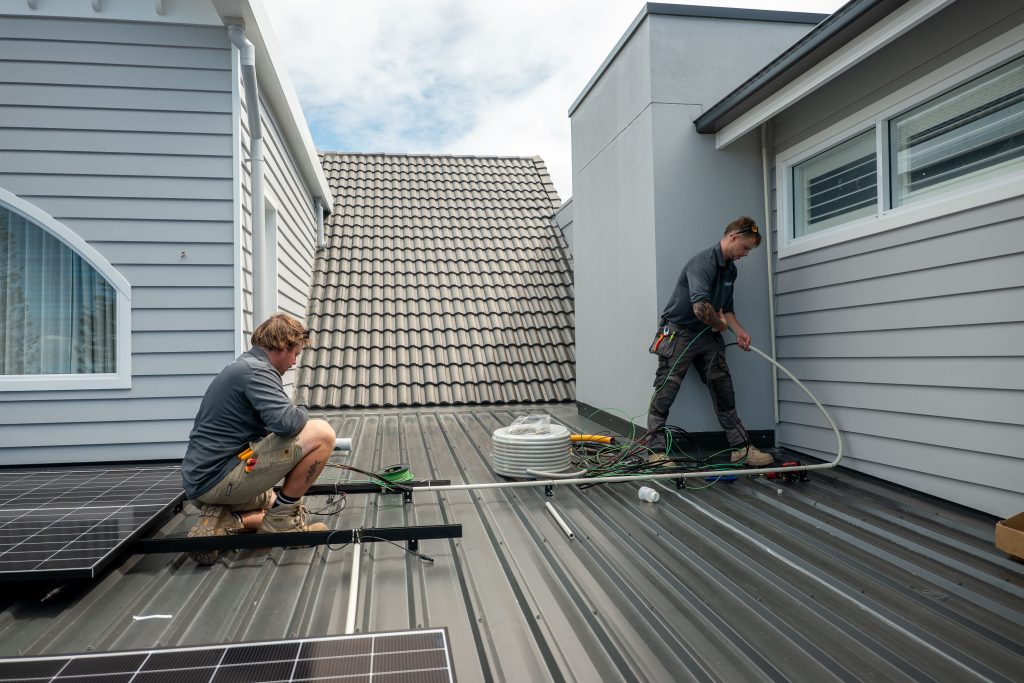
Compliance is not paperwork added after the fact. It is the design and installation process itself, and on the Gold Coast that means weatherproofing, cable routing, isolator placement, and switchboard checks all need to be correct from day one.
Clean Energy Council standards support safety, rebate eligibility, and baseline quality expectations, but good delivery also depends on process discipline. End-to-end service from consultation and design through to installation and post-installation support, ensuring seamless and transparent customer experience, matters because system performance is shaped before commissioning starts.
Common Compliance and Safety Items to Confirm
Check AS/NZS compliance, shutdown procedures, labeling, earthing, and correct placement of each DC isolator. Roof penetrations should be sealed properly, and mounting should be secure enough for storm conditions common to coastal Queensland.
Performance Verification After Commissioning
Expect baseline daily yield ranges by season, not a single best-day number. Monitoring should identify underperforming strings or communication faults early, which protects savings before small issues become long outages.
Real-World Examples: Typical Gold Coast Solar Energy Setups
A family home with daytime occupancy usually benefits most from load shifting and moderate PV sized around daytime demand. Homes with pools often improve returns by running pumps and heating during the solar peak, while small businesses can align PV output with trading hours and, where relevant, demand charges.
An evening-heavy household may justify a modest battery if night usage is consistent. The key is matching hardware to routine rather than buying for a theoretical off-grid scenario.
Example 1: East/West Roof to Stretch Production
An east array lifts morning output, and a west array supports late-afternoon cooling loads. On constrained roofs, this layout often improves self-consumption compared with a single concentrated array that peaks too narrowly at midday.
Example 2: Battery for Evening Loads (Not for “Total Off-Grid” Claims)
A battery can cover dinner-to-bed usage if sized to actual kWh demand. Backup power requires compatible hardware and clear circuit planning, so not every battery system provides whole-home resilience.
Common Mistakes to Avoid With Solar Energy in Gold Coast
Oversizing PV without checking export limits or daytime usage is one of the most common design errors. Large arrays can still disappoint financially if too much generation is exported at low tariff rates.
Shading is another frequent problem. Owners sometimes blame panels when the real issue is poor site analysis, weak layout planning, or an inverter choice that does not suit multiple roof faces.
Choosing on headline specs alone also creates avoidable risk. Warranties, local support pathways, and consumption visibility usually matter more than a small efficiency difference on a datasheet.
Red Flags When Comparing Quotes
Watch for no site-specific layout, no shading notes, vague model numbers, or unclear quote comparison terms. Missing detail around switchboard upgrade work, metering, and compliance paperwork often signals that the final scope is not fully defined.
Why Some People Remove or Replace Systems
Older systems are often removed temporarily for roof repairs or permanently when inverters fail, loads increase, or the original design no longer fits the property. EVs, renovations, and heavier air conditioning use commonly justify replacing an underperforming legacy system with a better-matched one.
FAQs
How much do solar panels cost on the Gold Coast?
Costs depend on system size, equipment tier, roof complexity, and any switchboard work. A useful quote itemises panels, inverter, installation, compliance, and monitoring so you can compare like for like.
Why are people getting rid of their solar panels?
Most removals are temporary for roof work or permanent because older systems underperform due to shading, poor design, or failing inverters. Many owners replace them with systems sized for current loads such as EV charging and air conditioning.
The strongest solar outcomes on the Gold Coast come from disciplined design, realistic savings assumptions, and equipment choices that fit the site. A good standard for evaluating any PV or battery decision is disciplined design, realistic savings assumptions, and verified compliance—then using monitoring to confirm the system performs as expected.Many Gold Coast property owners ask the same question: will solar actually lower bills, or just add another expensive system to manage? For households and businesses evaluating Solar Energy, the answer depends less on headline panel size and more on climate, usage timing, roof design, and tariff structure.
This guide explains how solar PV systems work, how to size them for Gold Coast conditions, what affects payback, and which design mistakes most often reduce performance.
Why Solar Energy Makes Sense on the Gold Coast
The Gold Coast has strong solar exposure, long cooling seasons, and electricity use that often peaks during sunny hours, which makes grid-connected solar especially practical for local homes and businesses. LUX GRID describes this well through its focus on tailored solar and battery solutions for both residential and commercial properties that reduce energy costs and improve self-consumption, because the financial value of PV is highest when generation overlaps with demand.
Rising retail tariffs have changed the economics of residential solar and commercial solar more than feed-in tariffs have. Each kilowatt-hour used on site avoids a retail purchase, so shifting pool pumps, air conditioning, and hot water into daylight hours usually matters more than chasing export income.
Peak demand refers to the periods when electricity usage across the grid is at its highest, often during hot afternoons when air conditioners and appliances are running simultaneously. On the Gold Coast, these peak demand times often align with sunny hours, and solar PV can be especially valuable on time-of-use or demand-based tariffs where daytime usage is priced higher. By generating and using solar power during peak demand, households and businesses can avoid higher tariff rates and reduce strain on the grid, further improving the financial and environmental value of their systems.
Gold Coast housing stock also helps. Single-storey homes, newer estates, and broad roof planes often allow cleaner PV layouts with fewer obstructions, which improves usable output and lowers design complexity.
Gold Coast Conditions That Affect Solar Output
Coastal weather creates variable production patterns, with humidity, passing cloud bands, and storm activity changing daily yield even in a high-sun region. Solargain and other national installers often highlight annual generation estimates, but on the Gold Coast, daily variability matters because self-consumption decisions are made hour by hour, not year by year.
Salt air and seasonal storms raise the importance of corrosion resistance, mounting quality, and waterproofing. Hardware that looks similar on a quote can perform very differently over time in a coastal environment, which is why material selection affects lifecycle value as much as nameplate wattage.
What “Savings” Really Means
Most solar savings come from avoided grid imports first and exports second. That is why a premium inverter brand such as Sungrow can only deliver strong financial results when the system is matched to the property’s actual load profile, not just installed at the largest size the roof can hold.
A well-designed system reduces expensive daytime purchases and uses feed-in tariffs as a secondary benefit. Real savings are therefore operational, not theoretical, and they improve when occupants understand when power is being used.
Solar Energy Basics: How a Home Solar PV System Works
A home PV system turns sunlight into usable electricity through a simple chain: panels generate DC power, and a solar inverter converts it into AC power for appliances and circuits. In practical terms, solar power only becomes financially useful when the inverter, switchboard, and metering are configured to direct energy first to household loads, then to battery charging or export.
The switchboard acts as the traffic controller between solar generation, grid supply, and any solar battery installed later. This interaction matters because poor integration can limit usable output, create nuisance tripping, or complicate future upgrades.
Performance depends on orientation, tilt, shading, and component quality more than brochure efficiency alone. A CEC Approved Solar Retailer may present compliant options, but system value still depends on whether the design reflects the site rather than a standard template.
Key Components You’ll Hear About
PV modules: Panels that generate DC electricity from sunlight.
Solar inverter: The unit that converts DC to AC and manages system output.
Mounting system: Rails, clamps, and roof attachments that secure the array and protect structural integrity.
Cabling, isolators, and monitoring: Electrical connections, safety devices, and software that track performance.
Optional additions include battery storage, a consumption meter, an EV charger, and a power optimiser for modules affected by partial shade. These extras matter when the goal is not just generation, but control over when and how energy is used.
Consumption monitoring is a recommended feature for any modern solar installation. By tracking real-time household energy use alongside solar production, consumption monitoring helps owners understand exactly when and how electricity is being consumed. This data makes it easier to adjust usage patterns, identify unexpected loads, and optimise self-consumption, which directly improves the financial return from solar.
Grid-Connected vs Battery-Ready vs Hybrid
Grid-connected systems are usually the simplest option and often deliver the shortest payback period because they avoid the cost of storage. Battery-ready and hybrid inverter setups cost more upfront, but they can reduce future retrofit complexity if evening demand is likely to rise.
Step-by-Step: How to Size Solar Energy for Your Gold Coast Property
Good sizing starts with data, not panel count: your tariff type, any export limit, and (ideally) interval data showing when you use power matter as much as total kWh. Twelve months of bills help estimate average daily kWh and seasonal changes, but usage timing usually requires interval (smart meter) data or a consumption monitor, which matters because export limits and roof space can make an oversized system less valuable than a smaller, better-matched one.
Future loads also matter. An EV, ducted air conditioning, electric hot water, or pool heating can change the economics of today’s design, so sizing should reflect where demand is going, not only where it has been.
Step 1: Read Your Usage Profile (Not Just Your Total Bill)
Look for daytime versus evening consumption, because that split determines self-consumption potential. A household that uses most of its electricity after sunset may still benefit from PV, but the design logic changes and may point toward storage.
Also identify demand spikes from air conditioners, hot water systems, and pool equipment. These loads often create the best opportunities for daytime scheduling.
Step 2: Map Roof Constraints
Count usable roof faces, shading sources, vents, and setbacks before choosing panel quantity. Trees, neighbouring buildings, and roof structures can reduce output unevenly, so a layout that appears large on paper may perform poorly in practice.
East-west splits can broaden production across the day. On the Gold Coast, that often improves real self-consumption more than concentrating all panels on one idealized face.
Step 3: Decide Whether a Battery Helps
Batteries help most when evening usage is high, feed-in tariffs are low, or your tariff structure makes evening imports expensive—and when your goal is either higher self-consumption or defined backup coverage. Battery sizing should follow measured night-time demand rather than marketing claims about energy independence, because storage that sits half-used rarely justifies its cost.
Costs, Rebates, and Payback: What to Expect on the Gold Coast
System pricing varies with array size, inverter type, roof complexity, and electrical work such as metering or switchboard changes. The biggest pricing mistake is comparing totals without comparing scope, because two quotes can differ materially in compliance work, monitoring, and product tier.
Requesting multiple solar quotes from reputable installers is a critical step in the decision process. Comparing solar quotes helps you identify differences in system design, equipment quality, warranty terms, and the scope of installation work. A detailed solar quote should clearly outline all components and services, making it easier to assess value and avoid hidden costs.
Small-scale Technology Certificates (STCs) usually reduce the upfront cost of eligible PV systems through a point-of-sale discount when approved equipment is installed by an accredited provider under program rules. For many owner-occupied properties, STCs can materially improve upfront economics, alongside factors like self-consumption and retail tariff rates.
Battery rebates and finance schemes can change, so current eligibility should always be checked before making assumptions about payback. A realistic payback estimate depends on self-consumption, tariff structure, and actual production, not on a single annual savings figure.
What Drives Solar PV Pricing Up or Down
Premium panels, stronger warranties, advanced solar monitoring, and better inverters generally cost more because they reduce operational uncertainty over time. LUX GRID frames this correctly through its commitment to quality workmanship using premium materials and expert techniques, backed by clear upfront pricing and no hidden surprises, because installation quality affects long-term cost as much as hardware.
Complex roofs, multiple arrays, difficult access, and compliance upgrades also increase labour and materials. Lower quotes can exclude important items, which shifts risk to the owner after installation.
Understanding STCs and Eligibility (In Plain English)
STCs are a federal incentive applied by the installer or retailer as an upfront discount. Eligibility depends on compliant installation, approved equipment, and system size within program rules.
Design Choices That Matter: Panels, Inverters, and Batteries
Panel quality affects long-term yield, but inverter selection often has a bigger effect on real operating performance. Solar Choice and similar comparison platforms can help frame options, yet the most useful design principle remains simple: choose components that suit shading, roof geometry, and future load growth.
LUX GRID’s perspective reflects this well, with over a decade of hands-on experience delivering premium solar and battery solutions with a focus on precision and long-term performance. That kind of field experience matters because the best system on paper can still underperform if the design ignores site conditions.
String Inverters vs Microinverters vs Optimisers
A string inverter is efficient and cost-effective when roof faces are simple and shading is minimal. A microinverter can perform better on complex roofs or partial shading because each panel operates more independently, while optimisers sit between the two by improving module-level performance with a central inverter.
Battery Storage: What to Check Before You Buy
Focus on usable battery capacity, not just headline battery capacity. Depth of discharge, round-trip efficiency, warranty throughput, and backup capability determine whether stored energy is actually valuable in daily use.
Backup power is a separate design question from bill reduction. Some systems support only selected circuits during outages, so blackout expectations should be defined before purchase.
Installation and Compliance on the Gold Coast: What “Done Right” Looks Like
Compliance is not paperwork added after the fact. It is the design and installation process itself, and on the Gold Coast that means weatherproofing, cable routing, isolator placement, and switchboard checks all need to be correct from day one.
Clean Energy Council standards support safety, rebate eligibility, and baseline quality expectations, but good delivery also depends on process discipline. End-to-end service from consultation and design through to installation and post-installation support, ensuring seamless and transparent customer experience, matters because system performance is shaped before commissioning starts.
Common Compliance and Safety Items to Confirm
Check AS/NZS compliance, shutdown procedures, labeling, earthing, and correct placement of each DC isolator. Roof penetrations should be sealed properly, and mounting should be secure enough for storm conditions common to coastal Queensland.
Performance Verification After Commissioning
Expect baseline daily yield ranges by season, not a single best-day number. Monitoring should identify underperforming strings or communication faults early, which protects savings before small issues become long outages.
Real-World Examples: Typical Gold Coast Solar Energy Setups
A family home with daytime occupancy usually benefits most from load shifting and moderate PV sized around daytime demand. Homes with pools often improve returns by running pumps and heating during the solar peak, while small businesses can align PV output with trading hours and, where relevant, demand charges.
An evening-heavy household may justify a modest battery if night usage is consistent. The key is matching hardware to routine rather than buying for a theoretical off-grid scenario.
Example 1: East/West Roof to Stretch Production
An east array lifts morning output, and a west array supports late-afternoon cooling loads. On constrained roofs, this layout often improves self-consumption compared with a single concentrated array that peaks too narrowly at midday.
Example 2: Battery for Evening Loads (Not for “Total Off-Grid” Claims)
A battery can cover dinner-to-bed usage if sized to actual kWh demand. Backup power requires compatible hardware and clear circuit planning, so not every battery system provides whole-home resilience.
Common Mistakes to Avoid With Solar Energy in Gold Coast
Oversizing PV without checking export limits or daytime usage is one of the most common design errors. Large arrays can still disappoint financially if too much generation is exported at low tariff rates.
Shading is another frequent problem. Owners sometimes blame panels when the real issue is poor site analysis, weak layout planning, or an inverter choice that does not suit multiple roof faces.
Choosing on headline specs alone also creates avoidable risk. Warranties, local support pathways, and consumption visibility usually matter more than a small efficiency difference on a datasheet.
Red Flags When Comparing Quotes
Watch for no site-specific layout, no shading notes, vague model numbers, or unclear quote comparison terms. Missing detail around switchboard upgrade work, metering, and compliance paperwork often signals that the final scope is not fully defined.
Why Some People Remove or Replace Systems
Older systems are often removed temporarily for roof repairs or permanently when inverters fail, loads increase, or the original design no longer fits the property. EVs, renovations, and heavier air conditioning use commonly justify replacing an underperforming legacy system with a better-matched one.
FAQs
How much do solar panels cost on the Gold Coast?
Costs depend on system size, equipment tier, roof complexity, and any switchboard work. A useful quote itemises panels, inverter, installation, compliance, and monitoring so you can compare like for like.
Why are people getting rid of their solar panels?
Most removals are temporary for roof work or permanent because older systems underperform due to shading, poor design, or failing inverters. Many owners replace them with systems sized for current loads such as EV charging and air conditioning.
The strongest solar outcomes on the Gold Coast come from disciplined design, realistic savings assumptions, and equipment choices that fit the site. A good standard for evaluating any PV or battery decision is disciplined design, realistic savings assumptions, and verified compliance—then using monitoring to confirm the system performs as expected.
Welcome to WordPress. This is your first post. Edit or delete it, then start writing!