It’s a fair question — and one we get asked every week. Is solar actually worth it, or is it one of those things that sounds great on paper but takes 15 years to pay back?
The short answer for Gold Coast homeowners in 2026: yes, solar is worth it. The numbers are better now than they’ve ever been. But there are a few things worth understanding before you commit — because the right system for your home makes a big difference to how quickly you see a return.
Here’s the honest breakdown.
Key Takeaways
- A 6.6kW solar system on the Gold Coast costs $4,500–$7,500 after rebates in 2026 and typically pays for itself in 3–4 years (SolarScorecard, 2026)
- The average Gold Coast household pays around $1,400–$2,143 per year on electricity — solar can cut that bill by 50–80% depending on usage and system size
- Gold Coast’s strong solar irradiance makes it one of the best locations in Australia for solar return on investment
- The federal STC rebate ends permanently on 31 December 2026 — after that date, upfront costs increase by $1,500–$3,000+
What Does Solar Actually Cost on the Gold Coast in 2026?
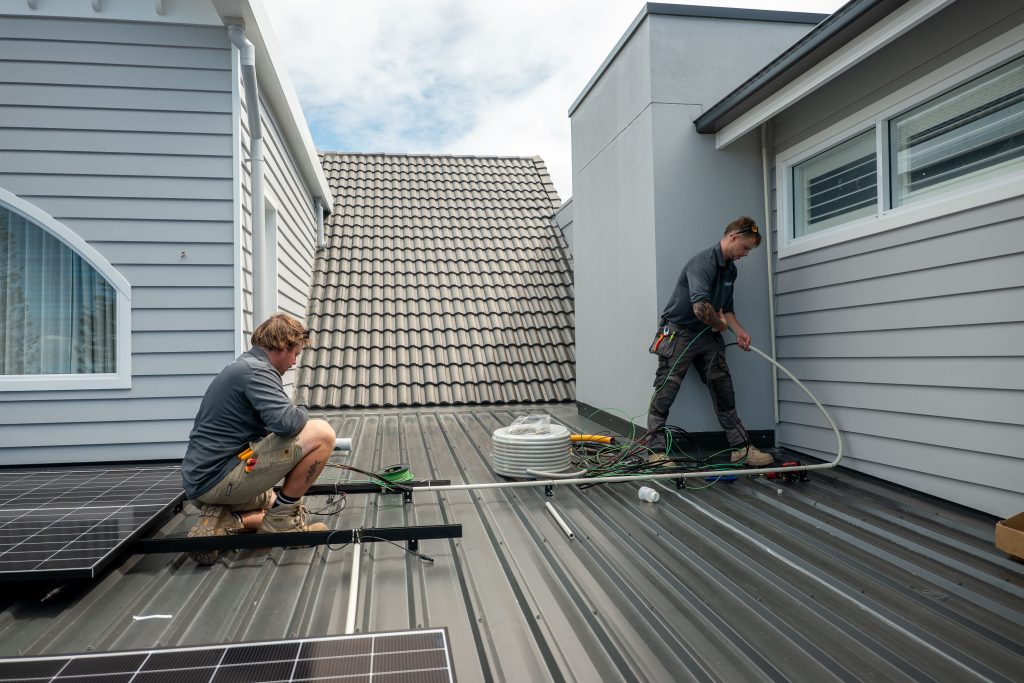
In 2026, a quality 6.6kW solar system installed on the Gold Coast costs between $4,500 and $7,500 after the federal STC rebate has been applied (SolarScorecard, 2026). The STC rebate — worth approximately $1,710 on a 6.6kW system — is deducted directly from your invoice by your installer.
For a 10kW system, expect to pay $7,000–$11,000 after rebates. Larger commercial-scale systems vary significantly based on roof complexity, inverter type, and panel brand.
What drives the price difference between installers?
- Panel brand and tier — Tier 1 panels from established manufacturers cost more but come with stronger warranties and better long-term performance guarantees
- Inverter quality — The inverter is the heart of your solar system. A quality inverter like Fronius, SMA, or SolarEdge costs more upfront but lasts longer
- Installation complexity — Multi-storey homes, steep pitches, or difficult roof access add labour cost
- Warranty and after-service — A 10-year workmanship warranty costs more to back than a 1-year guarantee
The cheapest quote is rarely the best value. A system that degrades faster, or an installer who disappears after handover, will cost you more in the long run.
See LuxGrid Energy’s Gold Coast solar installation services
How Much Can You Actually Save on Your Power Bill?
The average Gold Coast household spends between $1,400 and $2,143 per year on electricity depending on home size, usage habits, and current plan (EnergyPlans, 2026). Usage rates in South East Queensland currently sit at 26–33 cents per kWh.
A properly sized solar system running on the Gold Coast can reduce that bill by 50–80% for most households — meaning annual savings of $700 to $1,700 depending on how much power you use during daylight hours.
Factors that affect how much you save:
- How much power you use during the day — solar generates during daylight hours. If you’re home during the day running appliances, your self-consumption is high and your savings are maximised
- System size relative to your usage — an undersized system leaves savings on the table; an oversized system generates excess you export at low feed-in rates
- Your feed-in tariff — in South East Queensland, feed-in rates range from 8.7c to 15c per kWh. At those rates, exporting excess power earns far less than using it yourself
Worth knowing: Many Gold Coast homeowners focus on how much their system exports to the grid. But the real money is in self-consumption — every kWh you use directly from your solar panels is power you’re not buying at 30+ cents from the grid. Shifting energy-heavy tasks (dishwasher, washing machine, pool pump, hot water) to daylight hours can increase your effective savings by 20–30%.
What’s the Payback Period for Solar on the Gold Coast?
For most Gold Coast households in 2026, the payback period for a quality solar system is 3 to 4 years (Solar Set, 2026).
That’s one of the shortest payback periods in Australia — driven by Queensland’s high solar irradiance, relatively high electricity rates, and the current federal rebate.
Here’s how the numbers typically stack up for a Gold Coast home:
| Scenario | Annual Saving | Payback Period |
|---|---|---|
| 6.6kW system, mostly home during day | $1,800–$2,800 | 2.5–4 years |
| 6.6kW system, mostly away during day | $1,200–$1,800 | 4–6 years |
| 10kW system, high daytime usage | $2,500–$3,500 | 3–4 years |
| 6.6kW + battery, high usage | $2,000–$3,200 | 5–7 years |
After payback, every dollar saved on your electricity bill is a direct return on your investment — for the 25+ year life of the panels. Solar Payback Period by Scenario — Gold Coast 2026 Solar Payback Period by Scenario — Gold Coast 2026 6.6kW — home during day 2.5–4 yrs 6.6kW — away during day 4–6 yrs 10kW — high daytime usage 3–4 yrs 6.6kW + battery storage 5–7 yrs Source: Solar Set, SolarScorecard, 2026 — shorter bar = faster payback Typical solar payback periods for Gold Coast households in 2026. Daytime usage patterns have the biggest impact on how quickly a system pays for itself.
Is Solar Battery Storage Worth It on the Gold Coast?
Battery storage has crossed an important threshold in 2026. For the first time, the Federal Cheaper Home Batteries Program has reduced upfront battery costs enough that most Gold Coast homes can expect a payback period within the battery’s 10-year warranty period.
The rebate is currently worth approximately $243 per usable kWh of battery capacity — meaning a 13.5kWh Tesla Powerwall attracts around $3,280 off the retail price, applied directly to your invoice (Energy Solution Centre, 2026).
When battery storage makes the most sense:
- You already have solar and want to use more of what you generate
- You work from home or have high evening electricity usage
- You want backup power during outages
- You’re in an area with time-of-use tariffs (charge battery during off-peak, use during peak)
When battery might not be the priority:
- You’re installing solar for the first time with a tight budget — get the panels right first, add storage later
- Your usage pattern means most of your consumption happens during daylight hours already
- You’re a renter (battery ownership gets complicated without a long-term lease)
At LuxGrid Energy, we assess each home individually before recommending battery storage. For some customers, the numbers stack up immediately. For others, the better move is a well-sized solar system first, then battery in 2–3 years when prices continue to fall.
Talk to LuxGrid Energy about whether battery storage is right for your Gold Coast home
Why the Gold Coast Is One of the Best Places in Australia to Go Solar
Queensland consistently ranks among the top states in Australia for solar return on investment — and the Gold Coast specifically benefits from several factors that make the economics work better here than most places.
High solar irradiance. The Gold Coast receives among the highest levels of solar radiation in Australia. More sunshine means more generation, faster payback, and higher lifetime savings from the same system size.
High electricity rates. At 26–33 cents per kWh for imported power, every unit your solar generates and uses directly is a unit you’re not paying for at grid rates. The higher the grid rate, the more valuable your solar generation.
Strong rebate support. Queensland homeowners benefit from both federal STC rebates and the Federal Cheaper Home Batteries Program. Combined, these can reduce the total cost of a solar and battery system by $4,000–$6,000+.
Electricity prices dropping slightly from July 2026. Draft household electricity prices in Queensland are expected to fall by around $200 per year from 1 July 2026 — which slightly affects forward savings projections, but doesn’t change the fundamental economics of going solar.
The STC Rebate Ends on 31 December 2026
This is worth saying plainly: the federal STC solar rebate closes permanently at the end of 2026. After 31 December, new solar installations will no longer receive this upfront discount — meaning the cost of going solar increases by $1,500 to $3,000+ from January 2027 onwards.
If you’ve been sitting on the fence about solar, 2026 is genuinely the best year to act. Installer books fill up in the second half of the year as the deadline approaches — the sooner you get a quote and lock in your installation, the better.
Get a free solar quote from LuxGrid Energy on the Gold Coast →
Frequently Asked Questions
Is solar worth it on the Gold Coast in 2026?
Yes. A 6.6kW solar system on the Gold Coast costs $4,500–$7,500 after the federal STC rebate and typically pays for itself in 3–4 years. With the average Gold Coast household spending $1,400–$2,143 per year on electricity, a properly sized solar system can cut that bill by 50–80% (SolarScorecard, 2026).
How long does it take for solar to pay for itself on the Gold Coast?
Most Gold Coast households see solar payback periods of 3–4 years in 2026, depending on system size, daytime electricity usage, and feed-in tariff rates. Homeowners who use significant power during daylight hours typically see the fastest payback (Solar Set, 2026).
Is solar battery storage worth it on the Gold Coast in 2026?
For many Gold Coast homeowners, yes — particularly following the Federal Cheaper Home Batteries Program which provides approximately $243 per usable kWh off the cost of battery storage. Most Gold Coast homes with battery storage can now expect payback within the 10-year battery warranty period for the first time (Energy Solution Centre, 2026).
What size solar system do I need on the Gold Coast?
The most common residential system size on the Gold Coast is 6.6kW, which suits a typical 3–4 bedroom home. Larger homes or households with pools, EV chargers, or high daytime usage may benefit from a 10kW or larger system. LuxGrid Energy assesses your actual usage before recommending a system size.
Does the STC solar rebate end in 2026?
Yes. The federal Small-scale Technology Certificate (STC) scheme closes permanently on 31 December 2026. After that date, new solar installations will no longer receive the upfront STC rebate — increasing the cost of going solar by $1,500 to $3,000+ from January 2027 (Clean Energy Regulator, 2026).
LuxGrid Energy is a CEC-accredited solar and battery installer on the Gold Coast. We design systems around your actual usage — not a one-size-fits-all package. Get a free quote today →